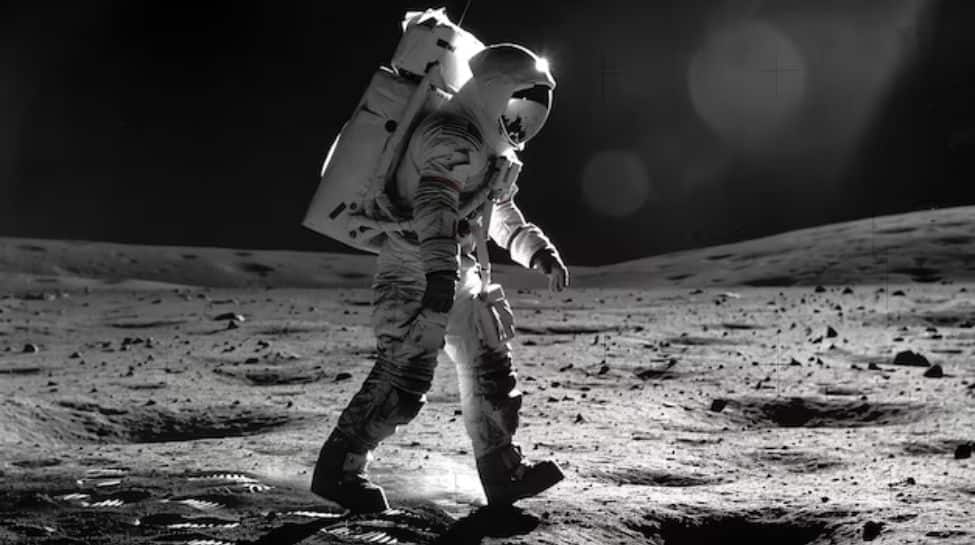
The first space race was driven by symbolism—planting flags and making footprints. Today, lunar landings are routine. The modern competition isn’t just about arriving; it’s about staying and building. And the key to staying is energy.
In April 2025, China reportedly announced plans to construct a nuclear power facility on the Moon by 2035 to support its envisioned international lunar research base. The U.S. responded in August, with acting NASA Administrator Sean Duffy indicating that an American reactor could be operational on the Moon as early as 2030.
Though this may sound like a sudden escalation, it’s been in motion for years. According to media reports, NASA and the U.S. Department of Energy have long been working on compact nuclear systems to power lunar settlements, resource extraction, and long-duration missions.
As a space law expert focused on humanity’s long-term expansion into space, I don’t see this as a military standoff. It’s a race to lay down infrastructure—and infrastructure brings influence, as per media reports.
While the idea of a nuclear reactor on the Moon might seem provocative, it’s neither against international law nor without precedent. If managed safely, such a project could facilitate peaceful exploration, spur economic development, and test technology for future deep-space missions. Still, it raises complex questions about access, responsibility, and control.
Legal Groundwork Already Exists
Nuclear technology in space isn’t new. Since the 1960s, both the U.S. and the former Soviet Union have used small nuclear generators to power spacecraft, satellites, and Mars missions like the rovers and Voyager probes.
The United Nations’ 1992 principles on nuclear power in outer space—a nonbinding resolution—acknowledge the necessity of nuclear energy in environments where solar power is not viable. It emphasizes safety, transparency, and international consultation.
Current international law doesn’t prohibit peaceful nuclear use on the Moon. What matters is how and where it’s implemented. The first country to establish a reactor could significantly influence the norms, expectations, and legal interpretations for lunar operations.
Why First Movers Matter
The 1967 Outer Space Treaty—signed by major space powers including the U.S., China, and Russia—guides the conduct of space activities. Article IX of the treaty requires nations to consider the interests of other parties.
In practice, if one nation installs a reactor, others will need to navigate around it—legally and logistically. That location could become a strategic anchor point. If it’s part of a larger facility, it may start shaping how other nations behave on the Moon.
Other provisions of the treaty support cooperation and freedom of access to celestial bodies, while rejecting any national claims of sovereignty. However, they also permit the creation of facilities like bases, which can allow nations to manage and limit access—at least in practice. While such limitations require prior consultation, they can still effectively give nations control over specific areas.
So, even if no one can “own” the Moon, deploying infrastructure like a reactor could influence how space is used and by whom.
Infrastructure as a Tool of Influence
Establishing a reactor signals a nation’s serious, sustained presence in a particular lunar region—especially critical areas like the Moon’s south pole. This region is rich in resources like water ice, which could support life and fuel rockets.
These areas are scientifically valuable and geopolitically contested, as multiple countries aim to set up operations there. Infrastructure in these zones can give one country practical control over resource access, potentially sidelining others.
There are concerns, of course—particularly about radiation and operational hazards. Even with peaceful intentions and sound design, reactors carry risks. But the U.N. guidelines include strict safety standards, and adhering to them could significantly reduce those risks.
Why Not Just Use Solar?
The Moon’s environment presents unique challenges for solar energy: long periods of darkness, and shadowed regions that never receive sunlight at all—especially where ice deposits are located. In such places, solar power is unreliable or completely ineffective.
A compact nuclear reactor could provide continuous power for years, sustaining habitats, vehicles, equipment, and life-support systems. Nuclear energy may be the foundation of long-term lunar missions—and eventually, for Mars missions, where solar energy is even more limited.
Not Alarm, But Accountability
Rather than triggering panic, the U.S. has an opportunity to lead both in building this technology and shaping how it’s governed. By openly sharing plans, following the Outer Space Treaty’s transparency requirements, and reaffirming peaceful and cooperative intentions, the U.S. could encourage other nations to act similarly.
In the next chapter of lunar exploration, flags alone won’t define leadership. Infrastructure will. And nuclear power may prove essential to establishing a sustainable presence.
Installing a reactor on the Moon isn’t a land grab or an act of aggression. But it is a projection of influence. And in space, infrastructure is how that influence will be asserted.