A man lay on a New York City sidewalk with a gun shot wound, clutching his side.
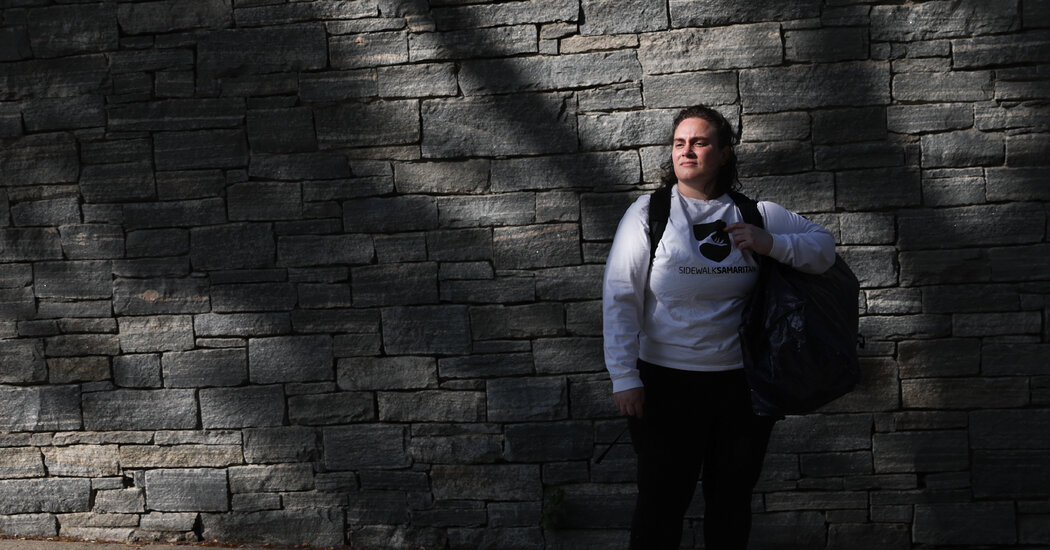
Emily Borghard, a social worker who hands out supplies to the homeless through her nonprofit, found him and pulled out her phone, preparing to dial 911. But the man begged her not to make the call, she said.
“No, no, no,” he said, telling her in Spanish that he would be deported.
Ms. Borghard tried to explain that federal law required hospitals to treat him, regardless of his immigration status, but he was terrified.
“He said, ‘If I go to the emergency department, that will put me on their radar,’” she recalled in an interview recounting the incident.
Across the country, doctors, nurses and social workers are increasingly concerned that people with serious medical conditions, including injuries, chronic illnesses and high-risk pregnancies, are forgoing medical care out of fear of being apprehended by immigration officials. Since the Trump administration announced plans for mass deportations and rescinded a Biden-era policy that protected spaces like hospitals, medical clinics and churches from immigration enforcement, doctors said they have seen sharp increases in patient anxiety and appointment no-show rates.
If the trend continues, health care officials say, the list of consequences could be long: Infectious diseases circulating unnecessarily; worsening health care costs because of untreated chronic illnesses; and dangerous birth complications for women who wait too long to seek help, among others.
In a survey conducted by KFF, a health policy research organization, 31 percent of immigrants said that worries about immigration status — their own or that of a family member — were negatively affecting their health. About 20 percent of all immigrants surveyed said they were struggling with their eating and sleeping; 31 percent reported worsened stress and anxiety.
A White House spokesman did not respond to messages seeking comment. When the administration announced that it was ending protections at hospitals on Jan. 21, a statement from the Department of Homeland Security said the new policy was intended “to enforce our immigration laws and catch criminal aliens.”
Research has shown that immigration crackdowns are linked with poorer birth outcomes and mental health status, lapses in care, and fewer people accessing the types of public programs that reduce illness and poverty overall.
“We’re really creating not just very serious health risks, but economic risks in the long run for our country,” said Julie Linton, a pediatrician and member of the committee on federal government affairs for the American Academy of Pediatrics. “These policies are creating very real fear and uncertainty for people and have a tremendous impact on their ability to function on a day-to-day level.”
Chronic Conditions
Many immigrant communities suffer from high rates of chronic conditions such as high blood pressure and diabetes, which, if left untreated, can lead to heart attack, stroke and other grave complications.
That is why doctors worry about patients like Maria, a 47-year-old woman with pre-diabetes, who has been going to the same primary care clinic ever since she arrived in the United States from El Salvador 20 years ago. Even during the first Trump administration’s crackdown on immigration, she continued to seek medical care. But when the protections around hospitals and clinics were rescinded earlier this year, Maria canceled her appointment to have her blood sugar checked, a routine and crucial element of diabetes prevention in patients like her.
“We’re very scared of being in the clinic and having ICE arrive while waiting to be called,” she said in Spanish, referring to U.S. Immigration and Customs Enforcement.
Maria, who asked that her last name not be published, said that she is in a state of “constant anguish.” She said she avoids leaving the house and is working on a plan for the care of her children, who are American citizens, in case she and her husband are deported.
One of their daughters, who is 15, is being treated for fatty liver disease and the other, 11, needs therapy for a developmental condition. Their older daughter has another doctor’s appointment in June. Maria and her husband don’t want to interrupt her care, but they are worried about taking her there themselves. “It’s very complicated,” Maria said. “I can put myself at risk for my children. But if it’s for my own health, I prefer to let it go.”
The consequences of abandoning regular medical care can turn serious quickly, however. Jim Mangia, president of St. John’s Community Health Network in Los Angeles, described one patient with diabetes who stopped showing up for a weekly diabetes education class. When a clinic staff member called the woman, they discovered she was afraid to even go to the grocery store, and had been subsisting for days on tortillas and coffee, he said.
“Thank God we reached her and she came in,” said Mr. Mangia, whose network serves an estimated 25,000 undocumented patients across more than 20 locations. Tests at the clinic showed that her blood sugar had become dangerously high.
“That’s what we’re going to see more and more of,” Mr. Mangia said. “It kind of breaks my heart to talk about it.”
Acute Care
For doctors working in urgent care settings, a drop-off in immigrants has become apparent through some unusual metrics. For example, Dr. Amy Zeidan, an emergency room physician in Atlanta, said that requests for Spanish-language interpretation in her hospital’s emergency department had fallen more than 60 percent from January to February.
Theresa Cheng, an emergency room physician at Zuckerberg San Francisco General Hospital and Trauma Center, said one of her residents had seen an immigrant patient who had suffered multiple facial fractures from an assault, but had not sought care for more than two weeks. “There is tremendous fear,” Dr. Cheng said.
In late January, Dr. Cheng said, she saw a patient who arrived with severely untreated diabetes. The patient, an undocumented woman, said she had waited to receive help because she was scared. She died that day.
Dr. Carolina Miranda, a family physician in the Bronx, spoke of a patient who had been granted asylum but, fearful of ICE, had failed to show up for a doctor’s appointment about a possible brain tumor.
Similar delays or cancellations are arising among pregnant women and new mothers, according to obstetrician-gynecologists around the country. Dr. Caitlin Bernard, an obstetrician in Indiana, said a patient had skipped her postpartum visit, explaining that she would no longer be leaving her house. On an obstetrics floor in a San Diego hospital, multiple staff members said they had seen an overnight drop-off following the inauguration in the number of immigrant women coming in with acute issues during their pregnancies.
“Obviously those women still exist,” said one doctor, who asked not to be identified because her employer forbade her from speaking publicly on the matter. “I fear it’s going to increase maternal mortality over time.”
Children’s Health
Many of the children of immigrant parents who have skipped appointments or left medications unfilled are American citizens. But in mixed-status families, parents who are at risk of deportation are often unwilling to take the risk of going to the clinic or pharmacy.
A pediatrician at a health center that cares for underserved populations on the central coast of California reported a 30 percent increase in no-shows for pediatric appointments. Many of those who do bring their children, and are referred elsewhere for specialty care, such as speech therapy, or an autism evaluation, refuse, saying they are too frightened, said the pediatrician, who asked to be unidentified because he wasn’t authorized to speak publicly.
Dr. Tania Caballero, a pediatrician at Johns Hopkins who sees patients at a health center for underserved groups called Baltimore Medical System, said she had encountered parents who had not wanted to go with their babies to the emergency room out of fear, and parents of children with chronic conditions like cerebral palsy, asthma, and Type 1 diabetes who had told her they have stopped getting vital care.
“I tell patients, ‘I can’t control what happens outside of my space, and I can’t control if somebody comes into my space, But you know me. I have the tools, and I want to help you navigate this journey and do it together,’” she said.
Some parents of children in other dire situations — such as those receiving cancer treatment — are hoping that their child’s condition might actually protect them. Some have asked pediatricians for letters explaining their child’s medical requirements, in hopes that immigration officials who detain them might be convinced that the child needs to stay in the United States to survive.
Dr. Lisa Gwynn, a pediatrician in South Florida who serves families from across the Caribbean and South America, said that her plummeting patient attendance rate is particularly worrisome because patients are missing out on childhood vaccines necessary for preventing diseases like measles, pneumonia and whooping cough.
Dr. Gwynn also worries that without coming to see her, children who have experienced severe trauma before coming to the United States aren’t being connected to social workers or psychologists who can help.
“Imagine your children living in a home where everyone’s scared, and they’ve come to this country to not feel scared anymore,” she said. “We know that stress does not fare well for health. Period. Kids don’t perform as well in school, they have mental health issues, depression, anxiety.”
A Dilemma for Hospitals
Some medical facilities have said they will comply with immigration officials. NYU Langone, in New York City, sent a memo to employees warning them not to try to protect illegal migrants. But many other health centers and organizations are finding ways to take a stand, telling staff to display “Know Your Rights” information on the walls and to never record their immigration status in a patient’s medical records.”
Last week, the New England Journal of Medicine published an article by two doctors and a lawyer detailing how physicians can continue to provide health care and lawfully push back in the face of some ICE requests.
The St. John’s clinic network in Los Angeles recently launched an ambitious home visitation program in which a doctor, nurse and medical assistant visit patients where they live to perform exams and deliver medications. They aim to inform all 25,000 of their undocumented patients of this option.
In the New York area, a hospital association suggested designating a “hospital liaison” who can be paged to quickly usher an agent into a private office, and then ask to see a signed warrant, which would then be reviewed by in-house counsel.
At the emergency room of University Hospital, a safety net facility in Newark, staff members hand out cards, in Spanish and other languages, reminding patients of their rights. “You have the right to refuse consent for immigration or the police to search yourself, your car or your home,” the cards state.
But even there, the fear is palpable. Annalee M. Baker, an emergency physician, said she had seen a young woman who said her partner had beaten her until she was unconscious. Covered in welts and bruises, she had waited hours to come in. The reason given: she was terrified that her partner would be deported.
Dr. Baker also treated a minor who had been stabbed; she had needed his parents’ consent to treat him, but the boy had been skittish about providing any details about them, out of fear they might be caught in the immigration dragnet.
Still, it is the people who never come in at all that haunt Dr. Baker the most.
“The tragic message to these people is: Be a shadow and hope that you do not die.”
Sarah Kliff contributed reporting.