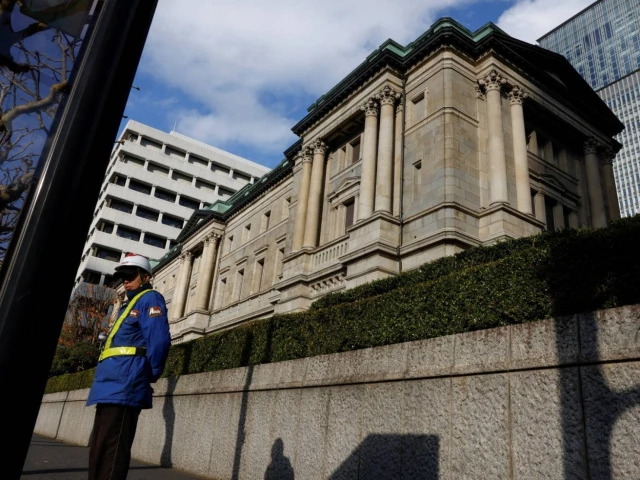
BOJ raises short-term rate to 30-year high, driven by persistent inflation, economic worries
The Bank of Japan (BOJ) has raised its benchmark interest rate to 0.75%, marking its highest level in three decades. The move, which took place after a two-day policy meeting, comes as the country grapples with persistent inflation and concerns about its economic future, the Associated Press (AP) has reported.
The rate hike of 25 basis points follows several previous increases in 2024, culminating in this policy change, which was widely expected by analysts. The BOJ’s decision signals a new phase of monetary tightening after years of ultra-low rates designed to stimulate Japan’s economy. The 0.25-percentage-point hike took the BOJ’s benchmark short-term rate to 0.75%, its highest level since September 1995. It will raise costs for mortgages and other loans. The BOJ also indicated that it might raise rates further in the future, depending on economic conditions.
According to Xinhua news agency, it is the first rate increase since January and also the first under the administration of Prime Minister Sanae Takaichi, who advocated an aggressive fiscal policy and monetary easing.
Reasons for rate cut
The BOJ’s decision to raise rates stems from a combination of economic factors that have pressured the central bank to pivot away from its historically low interest rates.
For years, Japan struggled with deflation, which is when prices fall, leading to reduced consumer spending and investment. In response, the BOJ kept interest rates near zero or negative, hoping to stimulate the economy by encouraging borrowing and spending. However, this strategy has faced challenges, especially with inflation rising faster than expected.
As of November 2024, Japan’s inflation rate was recorded at 3%, above the BOJ’s target of 2%. This sustained inflationary pressure has forced the central bank to act.
BOJ Governor Kazuo Ueda explained that the rate increase aims to ensure inflation remains consistent with the central bank’s 2% target. He added that inflationary pressures had risen moderately, and with the labour market showing signs of improvement, the BOJ could no longer justify maintaining its ultra-loose monetary policy.
However, Ueda stressed that the rate hike is still a cautious step, with real interest rates remaining in negative territory. Since Takaichi took office, the yen has sharply depreciated amid concerns that her expansionary policy would further deteriorate Japan’s fiscal health, prompting the selling of the currency and government bonds.
Implications for economy
The immediate impact of the rate hike was felt in both Japan’s currency and bond markets. The yen briefly weakened against the dollar, falling to the lower 156 range, while the yield on Japan’s 10-year government bonds rose to 2.02%, its highest level since 1999.
Rising bond yields, particularly on long-term government debt, could make borrowing more expensive for both consumers and businesses, potentially slowing economic growth. For Japanese consumers, the rate hike could lead to higher borrowing costs, especially for mortgages and personal loans. The cost of living has already risen in recent months due to higher prices for imported goods like food and energy, exacerbated by the depreciation of the yen.
While the rate hike may support the yen in the long run, providing some relief from inflationary pressures stemming from imports, it could also increase the burden on consumers already struggling with rising costs. On the other hand, the rate increase could offer higher returns on savings deposits, benefiting individuals who have invested in fixed-income assets. However, the potential rise in borrowing costs may slow down consumer spending, a critical engine of Japan’s economic growth.
The BOJ’s decision to raise rates comes at a time when most other major central banks, such as the US Federal Reserve and the European Central Bank, have either paused or begun to cut interest rates to support slowing economies.
While the US and Europe grapple with slower economic growth and the aftermath of the pandemic, Japan’s inflationary pressures and concerns about fiscal health have prompted the BOJ to shift its approach. The weakening yen, which has depreciated against the dollar in recent years, has also contributed to higher inflation in Japan.
Risks and challenges
The decision to raise rates is not without risks. Japan’s economy is still fragile, and the recent GDP contraction of 0.6% in the third quarter of 2025 highlighted the ongoing challenges faced by the country. Rising interest rates could further dampen consumer spending and investment, possibly pushing the economy into a deeper slowdown.
Moreover, Japan’s high levels of public debt, estimated at nearly 230% of GDP, present a big challenge. As borrowing costs rise, the government may face higher costs to service its debt, which could strain fiscal policy.